Meditation Centre in Rishikesh — Find Stillness in the Himalayas

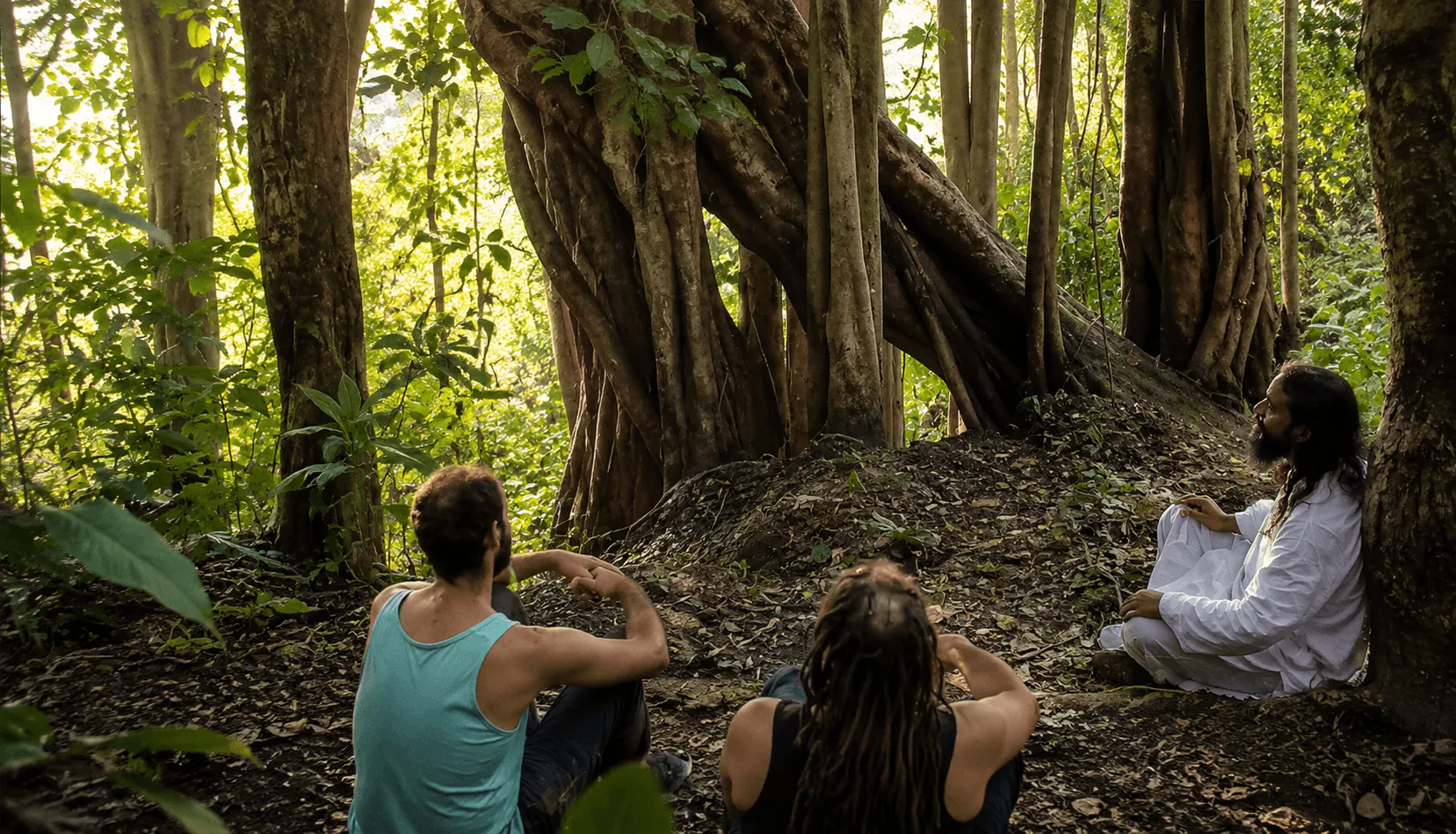
Meditation centre in Rishikesh at Maunvan — sitting in the Himalayan ashram
Maunvan meditation centre, Rishikesh — forested Himalayan setting above the Ganga valley

At a Glance — Maunvan Meditation Centre, Rishikesh

Maunvan is a small-group residential meditation centre in Rishikesh, set in forested hills above the Ganga valley. Programs run 5 to 21 days, groups are capped at 12 participants, and four classical techniques — Vipassana, Yoga Nidra, Mantra, and Trataka — are taught in genuine depth.

  • Programs: 5-day, 7-day, 10-day, and 21-day residential retreats
  • Techniques: Vipassana · Yoga Nidra · Mantra Meditation · Trataka
  • Group size: Maximum 12 participants per program — a firm limit
  • Who can join: Complete beginners welcome on 5 and 7-day programs
  • Fee: All-inclusive — accommodation, sattvic meals, all sessions, teacher guidance
  • Location: Forested ridge above Rishikesh, Himalayan foothills, Uttarakhand

What Makes Maunvan a Different Kind of Meditation Centre in Rishikesh?

Maunvan differs from most Rishikesh meditation centres in three ways: groups are capped at 12 participants, the ashram sits in forested hills away from town, and all four classical techniques — Vipassana, Yoga Nidra, Mantra, and Trataka — are taught by long-term practitioners rather than recent graduates.

There are many places in Rishikesh that offer meditation. Finding a meditation centre in Rishikesh that takes the practice seriously — where the teaching is genuine, the environment supports deep inner work, and the structure is built around actual transformation rather than a marketable experience — is more difficult.

Maunvan is a meditation centre in Rishikesh set on a forested ridge above the Ganga valley. The ashram is not in the town — it is above it, set among trees, where the natural silence is real and the conditions for deep practice are present without effort. The building itself has the quality that comes from years of genuine practice taking place within its walls: a settled, spacious atmosphere that practitioners consistently describe as unlike anywhere else they have been.

Groups are kept to a maximum of 12 participants — a firm limit, not an ideal. This is not a retreat centre that runs batches of 30 through standardised programs. Every participant is known by name. Every session is adapted to the actual people in the room. The difference between teaching meditation to 12 people and teaching it to 30 is not quantitative — it is qualitative. This is the most important thing to understand about Maunvan before you book.

Programs run from 5 to 21 days. The 5 and 7-day programs are fully accessible to beginners — people who have never sat for meditation in their lives. The 10 and 21-day programs require some prior experience and a commitment to extended periods of noble silence. All programs draw on the same four classical techniques: Vipassana, Yoga Nidra, mantra, and Trataka.

Why Does the Himalayan Setting Matter for Meditation in Rishikesh?

Rishikesh sits where the Ganga descends from the Himalayan foothills — a location with centuries of unbroken meditation tradition. Clean air, natural forest silence, and proximity to the river create physical conditions that reduce the effort required to settle the mind, making depth of practice more accessible from the very first sitting.

Rishikesh has been a centre for meditation practice for centuries — not because of commercial development, but because of geography. The town sits at the precise point where the Ganga descends from the Himalayan foothills onto the plains of India. The Himalayas are visible to the north. The river flows wide and cold and clear. The altitude is high enough that the air is genuinely clean. And the region has sustained an unbroken tradition of serious meditation practice for longer than most written records go back.

For those who have only meditated at home or in city studios, arriving at a place like Maunvan can be a revelation. The environment is not a backdrop — it is an active condition. Clean air, natural silence, proximity to the forest and the river, the absence of artificial stimulation: all of these reduce the amount of mental effort required to settle the mind. What takes 30 minutes at home to approach takes 5 minutes in the right environment. This is not mysticism — it is the basic relationship between the nervous system and its surroundings.

Rishikesh is also — for those who are drawn to it — a place with genuine spiritual weight. The Ganga carries the association of centuries of practice along its banks. The morning sound of bells from the ghats drifts up through the valley. The sense that thousands of people before you came to this river specifically to do the inner work you are here to do is palpable. Not everyone is moved by this — but for those who are, it adds a dimension to the practice that cannot be manufactured.

What Meditation Courses Does Maunvan Offer in Rishikesh?

Maunvan offers three core residential programs: a 5-day Introduction Retreat for beginners, a 7-day Deep Meditation Retreat combining Vipassana, Mantra, and Trataka, and a 10-day Silent Retreat with noble silence and 8+ hours of daily practice. A 21-day advanced program is also available on enquiry.

Maunvan's meditation courses in Rishikesh are structured as immersive residential programs — not drop-in classes. The residential format is essential: the continuity of practice across multiple days, the sattvic diet, the daily rhythm, and the community of fellow practitioners all contribute to the quality of the experience in ways that no single-day or evening class can replicate.

5
Day Program
Introduction Retreat
  • 3 daily guided meditation sessions
  • Pranayama & breath awareness
  • Yoga Nidra daily
  • Meditation philosophy talks
  • Morning gentle yoga
  • Evening satsang
Enquire About 5-Day Retreat
10
Day Program
Silent Meditation Retreat
  • Noble silence throughout
  • 8+ hours daily practice
  • Advanced Vipassana
  • Advanced pranayama
  • Daily teacher interviews
  • Intensive inner work
Enquire About 10-Day Retreat

What Does a Day at Maunvan's Meditation Camp Feel Like?

A meditation camp at Maunvan runs from 5:30 AM to 10:00 PM — pre-dawn pranayama, morning yoga, three meditation sessions, walking meditation, Yoga Nidra, and evening satsang. The entire day is designed as one continuous practice: every element reinforces the next, building depth of awareness that a single class or weekend retreat cannot produce.

The word "camp" conveys something that "course" or "program" misses: an intensive, all-day commitment to a single purpose. A meditation camp in Rishikesh at Maunvan is not a series of classes you attend and then return to your hotel room. The entire day — from the pre-dawn sitting to the evening practice — is structured to support the deepening of awareness. Every element reinforces every other element.

The mornings begin before sunrise, in the hour that the yogic tradition calls Brahma muhurta — the hour most supportive of meditation. A 75-minute sitting of pranayama and guided meditation precedes the morning yoga session. The physical practice that follows is not a workout: it is preparation for sitting — opening the hips and spine, calming the nervous system, and bringing the body into the quality of alertness and stillness that long sitting requires.

Meals are cooked according to Ayurvedic principles — sattvic food that supports mental clarity and emotional stability without stimulating excess mental activity. No meat, no refined sugar, no excessive spice. The effect on the mind over five to ten days is substantial. Practitioners who have meditated for years report that the mental quietness achievable in this environment after five days of sattvic diet is categorically different from what they experience at home.

The afternoon sessions vary: Yoga Nidra, walking meditation, Trataka, mantra repetition. The evening closes with a formal sitting and, on most days, a satsang — a gathering for chanting and philosophical discussion that gives the day a human warmth that pure silent practice alone cannot provide. Lights out by 10:00 PM. The quality of sleep in this environment — deep, natural, undisturbed — is itself a form of practice.

What Is Vipassana Meditation and How Is It Taught at Maunvan?

Vipassana is the sustained, non-reactive observation of physical sensation in the body. It is one of the most researched meditation methods in modern science, with documented effects on attention, emotional regulation, and stress response. At Maunvan, it is taught progressively across 7 and 10-day retreat formats by teachers with long-term personal practice.

Vipassana — the Pali word for "clear seeing" or "insight" — is the foundational meditation technique of the Theravāda Buddhist tradition. It is also one of the most extensively researched meditation methods in modern science, with documented effects on the brain's stress-response systems, attention networks, and emotional regulation circuits.

The practice is deceptively simple: sustained, non-reactive observation of physical sensation in the body. You are not trying to relax. You are not trying to achieve any particular state. You are learning to observe whatever is actually present — sensation, thought, emotion — without adding to it by reacting. Over time, this practice develops an equanimity that is not indifference but a stable, clear-eyed engagement with experience.

Maunvan is a Vipassana meditation centre in Rishikesh in the full sense: not merely a place that mentions Vipassana in its curriculum, but a centre where the practice is taught systematically, progressively, and with genuine depth by teachers who have sustained their own Vipassana practice over many years. The 7 and 10-day retreat formats are specifically designed to allow the practice to move through the predictable stages — restlessness, settling, deepening — that characterise a genuine Vipassana retreat.

For those drawn to the full Vipassana experience — extended noble silence, intensive daily schedules, and the most challenging and most transformative retreat format Maunvan offers — see the dedicated Vipassana Meditation Centre page.

How Do Yoga and Meditation Work Together at a Retreat in Rishikesh?

In the classical tradition, asana prepares the body for pranayama, pranayama prepares the mind for meditation. At Maunvan, morning Hatha yoga is not a fitness class — it is specifically designed to open the hips and spine so the body can sit still for extended meditation without discomfort. By day three, most participants experience the two practices as one continuous flow.

Yoga and meditation are not two separate practices that happen to share a schedule. In the classical tradition, asana is preparation for pranayama, pranayama is preparation for meditation, and meditation is the actual point. The body is not a distraction from the inner life — it is the gateway into it.

A yoga and meditation retreat at Maunvan teaches this integration as a lived experience. Morning asana sessions are not classes in physical fitness: they are designed specifically to prepare the body for the sitting practice that follows. The hip openers, spinal releases, and inversions of a well-designed yoga session directly address the physical discomfort that prevents beginners from sitting for more than 20 minutes without fidgeting. By the third day of the retreat, most participants find that the yoga and meditation sessions have become one continuous practice rather than two separate activities.

The yoga and meditation camp at Maunvan includes: morning Hatha yoga, pranayama, sitting meditation, Yoga Nidra, walking meditation, afternoon Yin Yoga, and evening satsang. The diversity of techniques is not for novelty — each technique serves a specific function in the overall arc of the day and the week. The combination produces a quality of integrated body-mind awareness that participants consistently describe as the most significant thing they take home from the retreat.

Looking for a dedicated yoga retreat with more asana focus? See Maunvan's full yoga program with 7, 14 and 21 day options.

View Yoga Retreat →

How Do You Choose the Best Meditation Ashram in Rishikesh?

The four criteria that separate a genuine meditation ashram from a commercial retreat are: teacher quality (long-term practitioners, not hired graduates), group size (under 15 is meaningful; under 12 is ideal), environment (forest or riverside, not a town-centre hotel), and honesty about what the programs can and cannot deliver.

Choosing the right meditation ashram in Rishikesh is not a minor decision. The quality of the teaching, the sincerity of the environment, the group size, and the depth of the curriculum determine whether a retreat is a pleasant holiday or a genuine turning point. These are the criteria worth examining before you book anywhere.

Teacher quality. Are the teachers long-term practitioners of the techniques they teach, or are they recent graduates hired to fill a schedule? At Maunvan, all teachers have sustained personal practices and have studied formally in their traditions — not just completed a training course and moved into teaching mode.

Group size. In a group of 30, a teacher cannot know your practice. They see you sit and stand with the group. In a group of 12, they observe your specific patterns — how you hold tension, where your attention drifts, what emotions surface — and can address these precisely. Small groups are not a luxury feature. They are a teaching necessity.

Environment. The ashram environment — its quietness, its cleanliness, its freedom from commercial noise and distraction — is part of the retreat. A meditation ashram on a busy Rishikesh commercial street is a different proposition from one set in forest above the valley. The environment is not separate from the practice.

Honesty about what is offered. The best ashrams are clear about what their programs can and cannot do. Maunvan does not promise enlightenment or guaranteed transformation. We offer structured, serious practice in a genuinely supportive environment, with teachers who care about the quality of your experience.

What Is a Spiritual Retreat in Rishikesh Like at Maunvan?

A spiritual retreat at Maunvan combines daily meditation practice with mantra chanting, evening satsang, and study of classical texts — the Yoga Sutras of Patanjali and the Upanishads. The setting in Rishikesh, where centuries of practice have accumulated along the Ganga, adds a dimension that practitioners consistently describe as qualitatively different from retreat centres in other locations.

A spiritual retreat in Rishikesh draws on something that has been present here for centuries: the tradition of using this particular landscape, this particular river, and this particular cultural inheritance as conditions for the inward journey. Rishikesh is not merely a scenic location — it is a place where the accumulated weight of serious practice gives the environment itself a quality that practitioners describe as palpable.

The evening satsangs at Maunvan bring this dimension into direct experience. Mantra chanting — which uses the vibration of Sanskrit sound to settle the mental chatter in a way that purely conceptual approaches cannot — is practised daily. The Yoga Sutras of Patanjali and the Upanishads are studied not as academic texts but as practical maps of the inner terrain the practice is exploring. The philosophical framework is not imposed — it is offered as a tool for those who find it useful.

Not everyone who comes to Maunvan identifies as "spiritual." Many come for pragmatic reasons: to reduce stress, to sleep better, to break a pattern that has become entrenched. And this is entirely welcome. The practice works regardless of framework. But for those who are drawn to the deeper dimensions — who feel that the mind's potential extends further than the management of daily anxiety — Maunvan offers the conditions to explore that openly and without embarrassment.

How Does Meditation Help with Healing and Stress?

Sustained meditation practice produces documented physiological changes: reduced cortisol, improved vagal tone, decreased amygdala reactivity, and enhanced prefrontal regulation of emotion. At Maunvan, Vipassana, Yoga Nidra, mantra, and sattvic diet work together to create a multi-layered healing environment that operates at neurological and emotional levels simultaneously.

Modern research on meditation has moved well beyond the early studies on stress reduction. The mechanisms by which sustained meditation practice produces healing effects are now reasonably well understood: reduced cortisol and decreased stress reactivity, improved vagal tone, decreased amygdala reactivity and structural brain changes, enhanced prefrontal regulation of emotion, and — in longer-term practitioners — measurable increases in grey matter density in regions associated with attention and self-awareness.

Maunvan functions as a healing meditation centre in Rishikesh in the sense that the programs are designed to produce these effects. The combination of Vipassana (which develops non-reactive observation), Yoga Nidra (which produces deep physiological rest), mantra (which settles mental noise rapidly), and sattvic diet (which supports neurological clarity) creates a multi-layered healing environment that works at levels most participants have not previously accessed.

This is particularly valuable for those coming with specific conditions: chronic anxiety, sleep difficulty, emotional exhaustion, grief, or simply the accumulated weight of years of high-performance professional life. The retreat does not diagnose or treat medical conditions. But the structured environment, the quality of the practice, and the personal attention available in a small group create the conditions in which the body and mind's natural healing intelligence can operate more freely than is possible in ordinary life.

Which Meditation Techniques Are Taught at Maunvan?

Maunvan teaches four classical techniques: Vipassana (insight meditation through body-sensation observation), Yoga Nidra (guided yogic sleep producing deep physiological rest), Mantra (Vedic sound-based settling of mental activity), and Trataka (candle-flame concentration for developing single-pointed focus). All four are integrated across every program.

👁

Vipassana — Insight Meditation

Systematic non-reactive observation of bodily sensation. The foundational Theravāda practice — one of the most extensively researched meditation methods, producing measurable changes in attention, emotional regulation, and stress response with consistent practice.

🌙

Yoga Nidra — Yogic Sleep

Guided awareness that maintains full consciousness while producing physiological rest four times deeper than ordinary sleep. Taught daily in all programs — particularly effective for anxiety, insomnia, and emotional processing.

🕉

Mantra Meditation

Vedic mantra repetition — one of the oldest and most stable meditation technologies in the human record. Works through vibration as much as meaning, producing a rapid settling of mental activity accessible even to complete beginners from the very first session.

🕯

Trataka — Concentration Practice

Sustained gazing at a candle flame — a classical Hatha Yoga technique for developing single-pointed focus and clearing mental congestion. Strengthens the sustained attention capacity that underlies all deeper meditation practice.

How Can You Train to Teach Meditation in Rishikesh?

Maunvan's meditation teacher training in Rishikesh is embedded within its 300-hour and 500-hour yoga teacher training programs — not offered as a standalone course. Trainees practice the techniques they are learning to teach across the full residential program, graduating with both theoretical foundation and sufficient personal experience to guide others into genuine practice.

For those who want to take their practice from personal experience into formal teaching ability, Maunvan offers meditation teacher training in Rishikesh as part of its 300-hour and 500-hour yoga teacher training programs. Meditation instruction — the philosophy, the techniques, the art of guiding others into stillness — is a substantial component of both advanced TTC programs.

Teaching meditation requires a different set of skills from practising it. A teacher must understand the common obstacles — restlessness, drowsiness, distraction, emotional eruption — well enough to recognise them in students and respond appropriately. They must be able to guide a session with language that is precise without being prescriptive, supportive without being intrusive. And they must have a personal practice deep enough to model the quality of attention they are asking others to develop.

The meditation teacher training at Maunvan is embedded in a full residential program — not a standalone course. Trainees practice what they are learning to teach. By the end of a 300 or 500-hour program, graduates have both the theoretical foundation and the personal experience required to guide others into genuine meditation practice.

Ready for the deepest immersion? Maunvan's dedicated Vipassana programme offers extended noble silence with intensive daily practice.

View Vipassana Programme →

What Is the Daily Schedule at Maunvan Meditation Centre?

The day runs from 05:30 AM wake-up to lights out at 10:00 PM, structured around pre-dawn pranayama and meditation, morning yoga, two further meditation sessions, walking meditation, Yoga Nidra or Trataka, and evening satsang. Meals are sattvic and taken at fixed times. The rhythm, sustained over 5 to 10 days, produces a quality of integrated awareness that random practice cannot replicate.

The schedule is built on the classical understanding that different hours of the day support different qualities of practice. The pre-dawn hour is for deep sitting. The morning is for active yoga. The afternoon is for learning and lighter awareness practices. The evening returns to stillness. This rhythm — followed consistently over five to ten days — produces a quality of integrated awareness that random practice never reaches.

  • 05:30 AMWake up — pre-dawn Himalayan silence before the valley stirs.
  • 06:00 AMPranayama & sitting meditation — 75 minutes of guided breathwork and silent practice.
  • 07:30 AMMorning yoga — gentle Hatha practice to open the body for extended sitting.
  • 08:30 AMBreakfast — sattvic vegetarian meal (in silence during 10-day program).
  • 10:00 AMMeditation session — 90 minutes of Vipassana, mantra, or technique-specific practice.
  • 12:00 PMWalking meditation — mindful movement in the ashram garden and forest paths.
  • 01:00 PMLunch & rest — main meal followed by free time for rest or self-study.
  • 03:30 PMAfternoon session — Yoga Nidra, Trataka, or breath-centred awareness.
  • 05:00 PMTeacher interview or small-group philosophy discussion.
  • 07:00 PMDinner — light sattvic evening meal.
  • 08:00 PMEvening meditation — Trataka or guided awareness. Lights out by 10:00 PM.

What Is Included in the Retreat Fee at Maunvan?

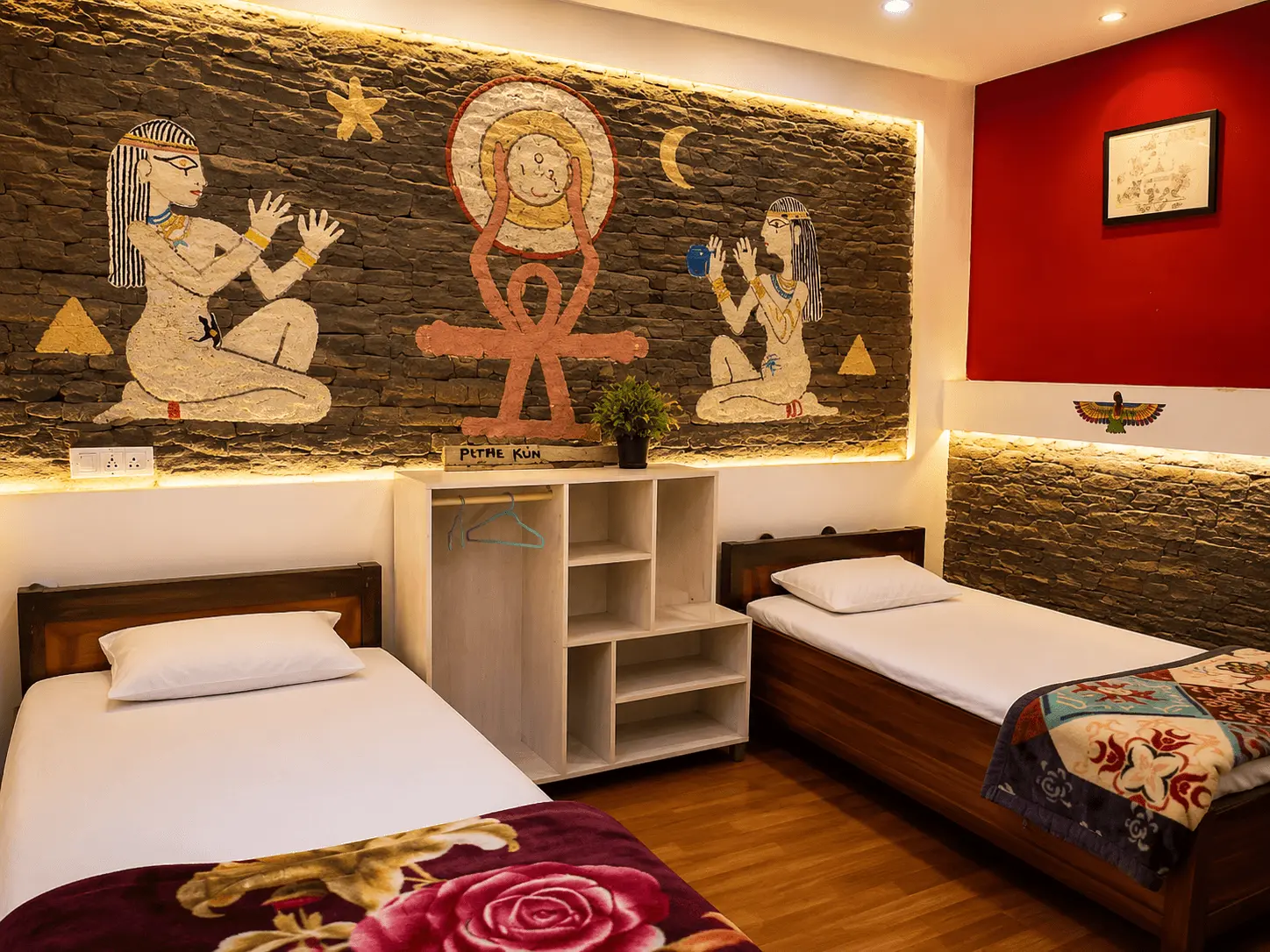
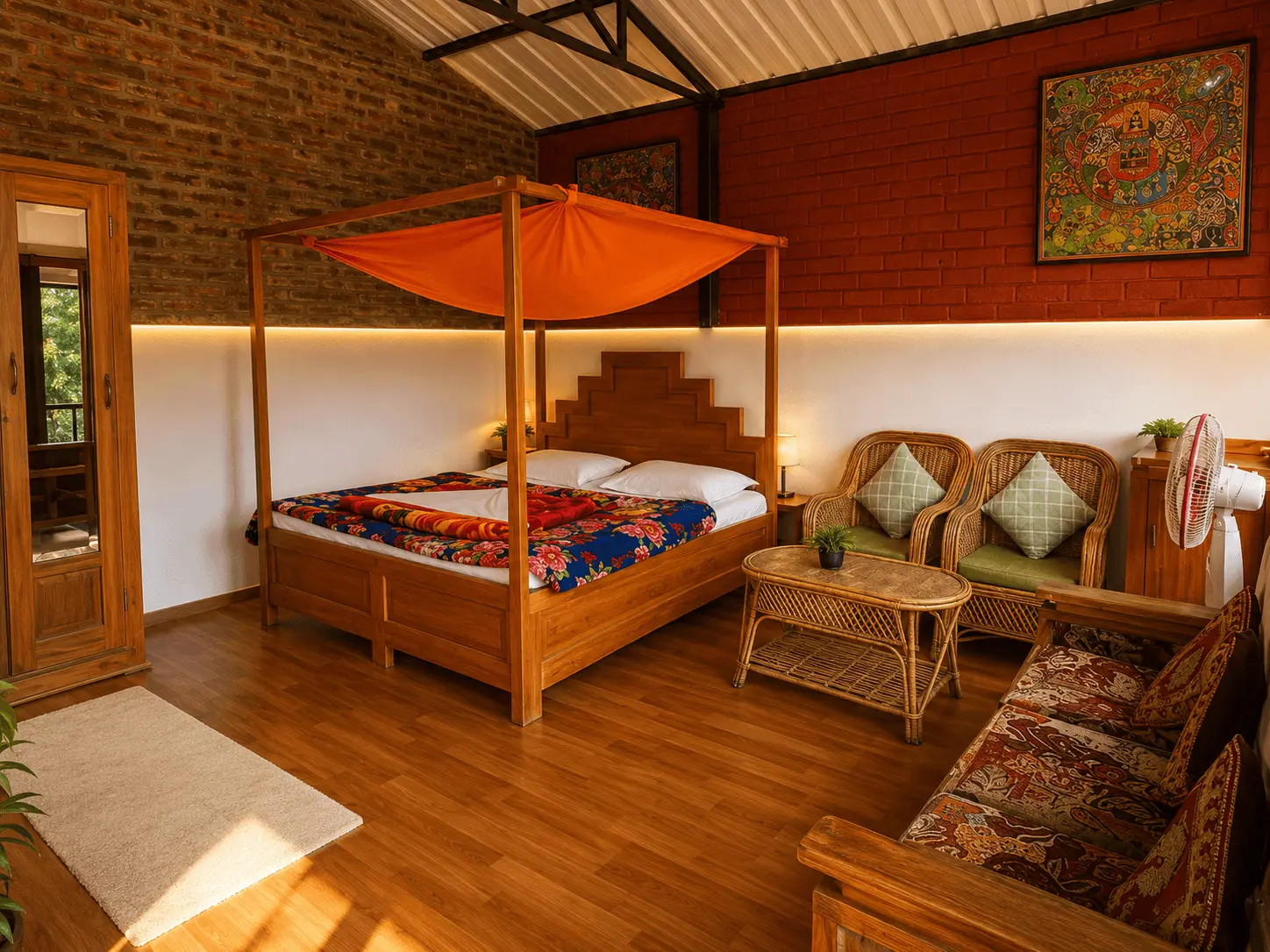
The fee is fully all-inclusive: accommodation at the ashram (shared or private), three sattvic meals daily, all meditation and yoga sessions, daily teacher access and personal interviews, philosophy study materials, evening satsang, and a certificate of completion. There are no per-session charges or upsells once you arrive.

All fees are fully all-inclusive — there are no per-session charges, hidden extras, or upselling once you arrive.

🛏Accommodation at Maunvan ashram (shared or private)
🥗Three sattvic meals per day
🧘All meditation sessions & guided practice
👨‍🏫Daily teacher access & personal interviews
🌿Ashram grounds & walking meditation forest paths
📚Philosophy study materials & talks
🎵Evening satsang & mantra chanting
📜Certificate of completion

Frequently Asked Questions About Maunvan Meditation Centre

I have never meditated before. Can I attend? +
Yes. The 5 and 7-day programs are designed to be fully accessible for complete beginners. Teachers begin with the very foundation of sitting practice — posture, breath, and the basic instruction of where to place attention — before introducing any technique. No prior experience is needed or assumed.
How much does the meditation course in Rishikesh at Maunvan cost? +
The fee is fully all-inclusive — accommodation, all meals, all sessions, and personal teacher guidance are covered in a single price. Pricing varies by program duration and room type. Contact us via the enquiry form or WhatsApp for current rates and availability for your preferred dates.
Is noble silence maintained throughout? +
Noble silence is observed during all formal meditation sessions in all programs. The 10-day program extends silence to meals and free time. Participants on 5 and 7-day programs may speak during meals and free periods. We encourage minimal phone use throughout — digital silence significantly deepens the quality of the practice.
Is Maunvan a Vipassana centre in Rishikesh? +
Yes. Vipassana is one of the four core techniques taught at Maunvan and is the primary practice of the 10-day silent retreat. For a fully dedicated Vipassana program with extended noble silence and intensive daily schedules, see the Vipassana Meditation Centre page.
What is the best time to visit the meditation centre in Rishikesh? +
October to March is the most popular season — cool, clear weather and crisp Himalayan air that supports deep practice. April to June is warm but beautiful. July and August are the monsoon months — the forest is extraordinarily lush and alive, though some outdoor activities may be adjusted. Programs run year-round.
How many people are in each meditation retreat group? +
A maximum of 12 participants per program — a firm limit. This is what makes truly personal teaching possible. Teachers observe your specific practice patterns and can address them precisely throughout the retreat.